
Since 1995 Civitavecchia has been linked to an extraordinary event, regarded by many as
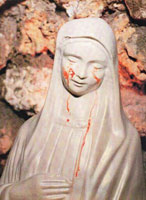
miraculous, that drew national attention and sparked debate in Catholic circles in Italy and abroad, even reaching the Holy Father.
On 2 February of that year, the feast of the Presentation of Jesus at the Temple and the Purification of Mary, a small statue of the Madonna — depicting the Queen of Peace and coming from Medjugorje — began to weep blood in the garden of a family in the parish of Sant’Agostino, in Civitavecchia.
From 2 February to 15 March the Madonnina wept fourteen times, in the presence of many people who gave sworn testimony before the Theological Commission set up by the Bishop. The Bishop himself held the statue during the last weeping of blood and, having overcome his doubts, opened the way to an official recognition.
During those events there were open debates between those who affirmed the authenticity of the miracle and those who, with scepticism, thought it was a human rather than divine action. The statue was examined scientifically with positive results: no tricks or hidden devices were found, and the tears were human blood.
On 17 June 1995, after many difficulties, the Bishop placed the statue in a case in the parish of Sant’Agostino and exposed it for the veneration of the faithful. From that day a pilgrimage of international scope began towards the figure now known to everyone as “the Madonnina of Civitavecchia”.