
Civitavecchia is the result of a millennia-long process of civilisation and urbanisation in
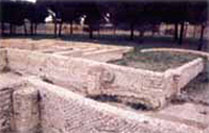
the Lazio region. In the area where the city stands today — only 70 km from Rome — significant traces of human presence and social organisation from prehistoric times onwards are layered across the ages.
Evidence of early settlements along the Civitavecchia coastline is abundant,
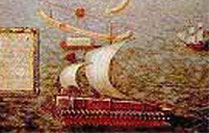
as are important Etruscan, Roman and medieval structures that, since the days of ancient Rome, earned this centre the title of Port of Rome.
Civitavecchia is ancient Centumcellae, named after the rocky inlets that offered shelter to ships. In 106 AD Emperor Trajan chose the site for a harbour to replace the almost silted-up port of Ostia. The design was entrusted to the architect Apollodorus of Damascus. City and port grew together: the main aim was to give Rome subsidiary harbour facilities alongside those Trajan had already expanded at the mouth of the Tiber.
More and more ships bound for the West began to call at Centumcellae, and the city developed rapidly. It reached its peak in the imperial age; from 314 to 538 AD it was occupied by the Byzantines and, in the 8th century, came under papal rule.
In 828 the city was seized by the Saracens, who destroyed it almost completely and turned it into a base for military operations against Rome. Survivors built a small village in the Tolfa woods and only sixty years later returned to rebuild their city. On the ruins of the ancient harbour, around the year 1000, Civitavecchia rose again. During the French occupation (1798–1815) the popes temporarily lost control; in 1870, after a further conflict, papal dominion ended for good.
In the Second World War much of Civitavecchia's monumental heritage suffered severe damage: even today the city lacks some of its ancient landmark buildings. Because of the strategic port, an hour from Rome, Civitavecchia endured 76 bombings that levelled it, with about two hundred and fifty dead and irreparable harm to historic structures.
On 8 March 1999 the city received the Gold Medal for Civil Valour with the following citation: «A city of strategic importance thanks to its Mediterranean port, during the last World War it was subjected to continuous and extremely violent bombings that caused the death of many citizens and the almost total destruction of the built-up area and port facilities. The population, forced to take refuge in nearby towns, with the return of peace faced with pride the difficult work of reconstruction. 1943 - 1945.»
Today the city's economy is based on the port and on related tourism and fishing. There are two Enel thermoelectric power plants, one combined-cycle and the other, Torre Valdaliga Nord, the subject of controversy and two local referendums over pollution risks linked to coal use.